
News·
What is NLP and what is it used for?
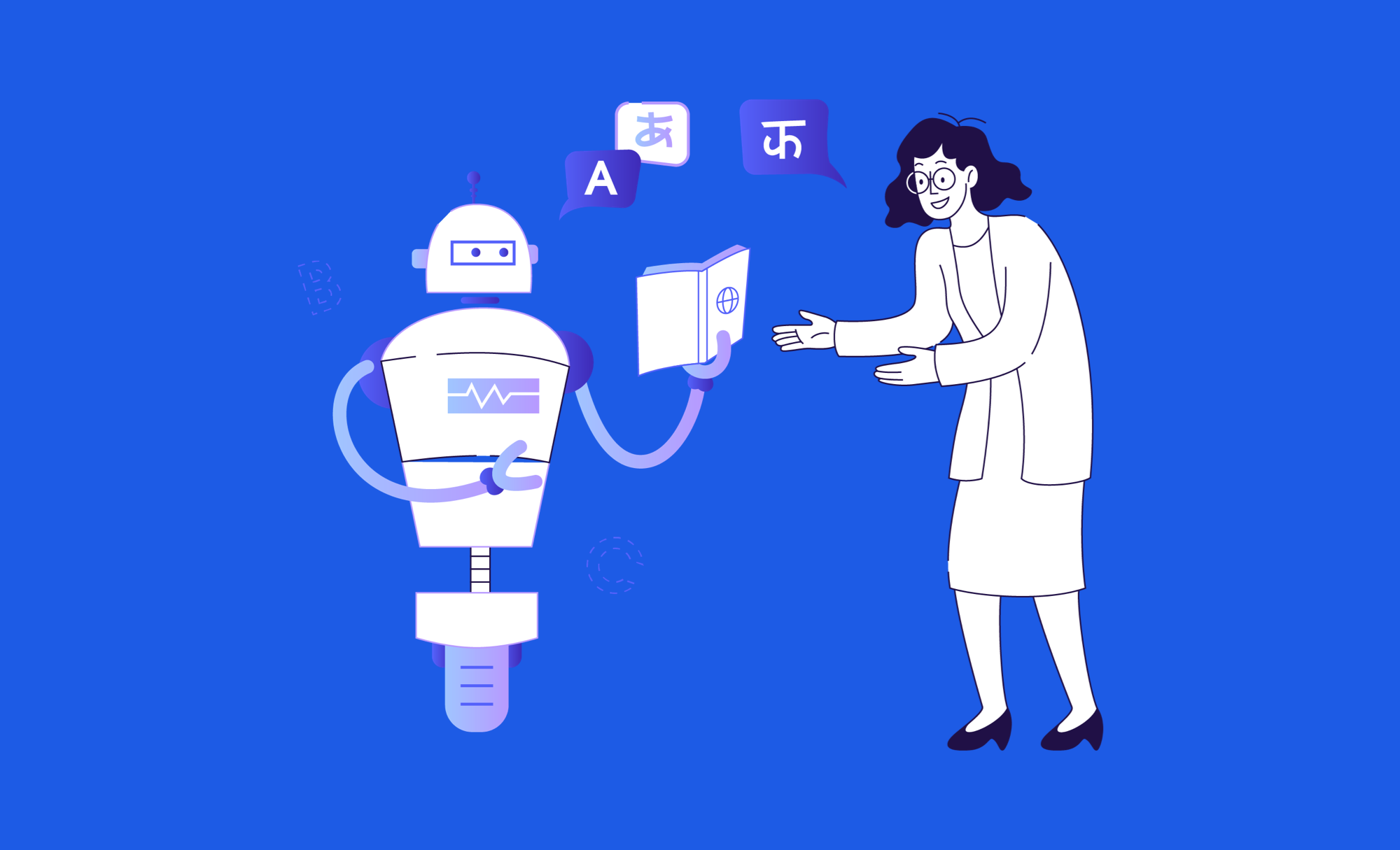
NLP is a branch of artificial intelligence that deals particularly with the processing of written language.
In short, it is everything that is related to human language and its processing by
computer tools.
The only AI workspace you need
NLP (Natural Language Processing) is a branch of artificial intelligence that deals particularly with the processing of written language.
In short, it is everything that is related to human language and its processing by computer tools.
NLP can be divided into 2 main parts, the NLU (Natural Language Understanding) and the NLG (Natural Language Generation).
The first one is the whole "understanding" part of the text, taking a text as input and being able to get data out of it.
The second is generating text from data, and being able to build coherent sentences automatically.
Automatic Natural Language Processing is used on a daily basis for hundreds of different purposes, let's see some examples together...
1. Classification
Classification is simply putting a label on a text, making it belong to a well-defined group or class. Let's take the example of an application that offers the user the possibility of reading articles on current events from different sources.
Let's say we want to classify the articles by theme. We start by defining the possible themes: Sports, Politics, Economy, Health, Technology.
The role of a classifier or classification tool, in our case, will be to "detect", for each article in the application, whether it is a sport, political, economic, health or technology article.
Creating classifiers is a complex NLP task. However, tools like Tinq.ai's custom classifier tool help to create high-quality classifiers without writing a single line of code.
[Video] Learn how to create custom classifiers with Tinq.ai in minutes.
2. Paraphrasing
A paraphraser is a particular tool that will assist you in rewriting content and making it distinctive without affecting its meaning. You may come across some terms that are detrimental to the readability of your text.
With such a circumstance, you require the assistance of a paraphraser that can assist you in achieving outcomes that exceed your expectations. In this area, you can employ NLP paraphrases such as Tinq.ai's rewriting web tool & API.
NLP technologies will not only maintain the true meaning of your data, but will also only employ synonyms that make your text understandable. As a result, you won't have to be concerned about your readability score.
With these tools, you can rest assured that your work will not suffer as a result of poor word choice. If you're a writer looking to avoid plagiarism, you should use NLP-based tools.
Converting your work from copied to unique will be a wonderful experience for you.
Learn how to paraphrase and avoid plagiarism with Tinq.ai's plagiarism checker.
3. Summarizing
With the web today, there has never been so much written information in the history of mankind.
Quintillion bytes of data are created every day. It has become easy to get lost in all this information. If we could reduce the length of texts while keeping the essential information, we would save a lot of time in the search for information.
For example, we would spend less time reading the news, having just the minimum to know without the superfluous detail. We would gain inefficiency.
With recent NLP and machine learning methods, we can create more or less decent automatic summarization tools.
Check out Tinq.ai's summarizer.
Tinq.ai's NLP API
Tinq.ai's mission is to make it easy for developers and non-technical people to have access to high-quality and easy-to-use machine learning tools.
We offer APIs for:
- Paraphrasing
- Summarizing
- Sentiment analysis
- Entity Recognition
- Web Article extraction
- Plagiarism checker
- And much more
Feel free to register and try our tools for free.
Related Posts


Unify all your datasources and give your AI the context it needs.
Connect Google Drive, SharePoint, Notion, CRMs, wikis, and more—securely indexed and instantly usable in ChatGPT, Claude, Gemini, or any AI assistant.